Real Estate
New York's Rewritten Rules for Accessing a Neighbor's Property Are Reshaping Construction Disputes
 Baltazard Law Office
·
September 20, 2026
Baltazard Law Office
·
September 20, 2026
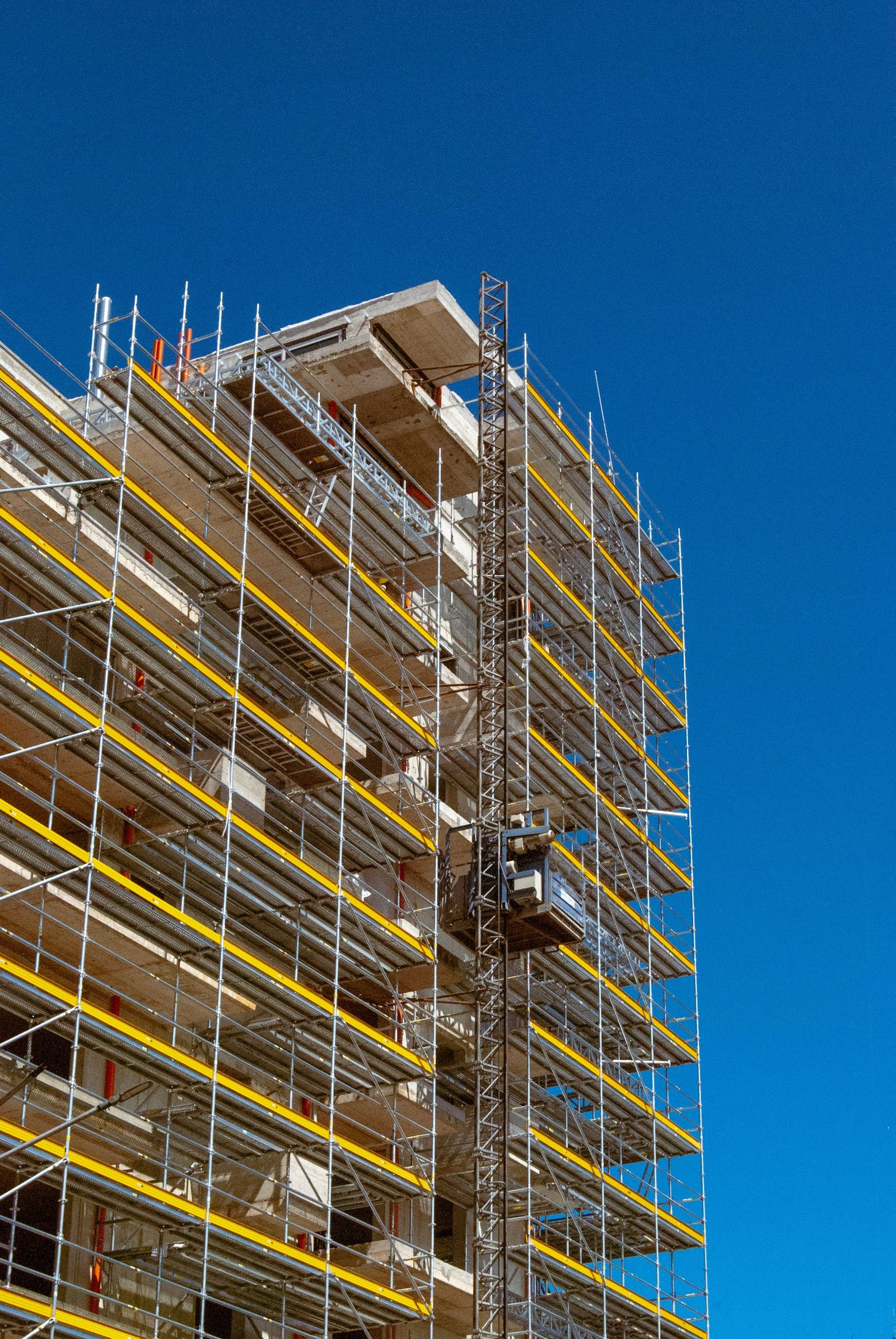
Anyone who has tried to renovate a rowhouse, replace a roof, or repair a building facade in a dense New York neighborhood has likely encountered a basic, practical problem: some of that work cannot be done safely, or at all, without briefly stepping onto, or over, the property next door. For decades, Real Property Actions and Proceedings Law Section 881 has given owners a path to court when a neighbor refuses to allow that kind of temporary access, letting a judge grant a license to enter adjoining property to install scaffolding, safety netting, or other equipment needed to complete work on one’s own building. Since the statute was first enacted more than fifty years ago, however, it said relatively little about how these disputes should actually be resolved, leaving courts to fill in the gaps case by case. As property values rose and construction activity intensified in recent years, RPAPL 881 litigation increased along with it, and disputes over what counted as truly "necessary," how long access should last, and what an owner should have to pay for it varied considerably from one courtroom to the next.
Governor Hochul signed a significant amendment to RPAPL 881 into law on December 5, 2025, effective immediately, intended to bring more structure and predictability to that process. Several changes stand out. The amendment lowers the legal bar for obtaining access: rather than showing that entry onto a neighbor’s property is strictly "necessary," an owner can now obtain a license by showing the work "cannot be performed in a commercially reasonable manner" without it, a standard that gives courts, and owners, considerably more flexibility. It also addresses a common source of delay by establishing that if an adjoining owner fails to respond to two written access requests within 60 days, that silence is treated as a denial, allowing the requesting owner to bring the matter to court rather than waiting indefinitely for a response.
The amendment also expands and clarifies what kinds of work can justify an access license, explicitly covering activities such as installing protective netting, tie-backs, anchors, straps, and underpinning — categories that had previously created uncertainty about whether they went beyond the kind of temporary access the statute was meant to allow. At the same time, the law adds new protections and obligations on the other side of these disputes. Courts are now directed to require reasonable compensation to the adjoining owner for the loss of use and enjoyment of their property during the access period, and may require the party seeking access to reimburse the adjoining owner's reasonable professional fees for reviewing the license request. Owners seeking access must also come forward with more documentation upfront, including drawings, engineering reports, and evidence of general liability insurance naming the adjoining owner as an additional insured, before a court will consider the request. Certain government and public entities are carved out of the statute's requirements altogether.
Taken together, these changes are designed to cut down on the kind of protracted, undefined litigation that RPAPL 881 disputes had increasingly generated, by giving both sides clearer expectations from the outset. An owner planning a renovation or repair now has a faster, more predictable route to court if a neighbor is simply unresponsive, and a somewhat easier legal standard to meet once there. An adjoining owner, meanwhile, is guaranteed a right to compensation and reimbursement of review costs that earlier case law did not uniformly provide, even as the lower "commercially reasonable" standard may make it harder to defeat a well-documented access request outright.
Nearly a year into the amended law, real estate and construction attorneys continue to track how courts are applying its newer provisions, particularly the more flexible "commercially reasonable" standard and the compensation requirements, to license applications filed in 2026. Because so much of the amendment’s practical effect depends on how individual judges apply these newer, less-tested standards to the specific facts of a given building project, owners and developers currently planning work that may require entry onto a neighbor’s property, and adjoining owners who receive such a request, are generally well served by reviewing the current documentation and notice requirements closely before a dispute reaches court.
Property owners, developers, buyers, or sellers anywhere in New York with questions about an access request, a pending renovation or construction project, or any other residential or commercial real estate matter are welcome to contact Baltazard Law Office, which represents clients in residential and commercial real estate matters across New York State, for guidance.
Attorney Advertising. Prior results do not guarantee a similar outcome.
Sources
- Client Alert: New York Amends Statute Governing Adjoining Property Access — Olshan Frome Wolosky LLP
- New York Amends Section 881 of Real Property Actions and Proceedings Law — Nixon Peabody LLP (December 19, 2025)
- Amended RPAPL Section 881: Streamlining Access Proceedings for Property Repairs and Improvements — Herrick, Feinstein LLP (January 6, 2026)
By Baltazard Law Office
Have a Question About Your Case?
Schedule a confidential consultation with Baltazard Law Office.
Schedule a Consultation